
To Combat Climate Change, Builders Create Greener—and Tougher—Homes
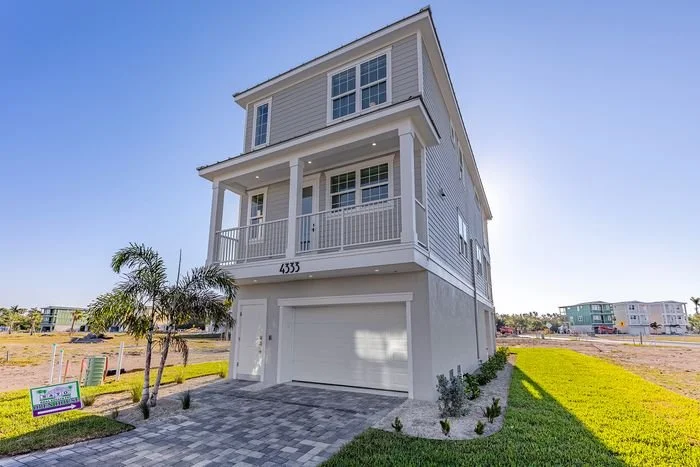
CORTEZ, Fla.—William Fulford’s home in a new development here didn’t lose power when Hurricane Idalia struck Florida’s Gulf Coast in August, leading to many outages in the area. It also escaped with no damage or water intrusion.
The trick to its survival: The $1.3 million home built last year to be energy efficient is also great at withstanding major storms.
“We woke up the next morning just like normal,” said Fulford, 76 years old, who moved into the home last year with his wife, Sueann Colombo. “It’s a damn strong house.”
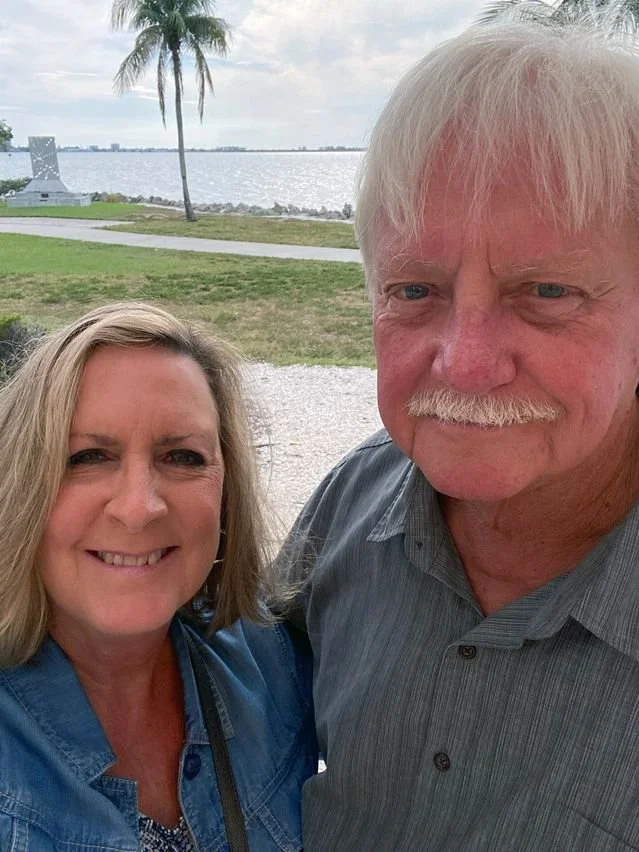
Sueann Colombo and her husband, William Fulford, say their home in Hunters Point didn’t lose power when Hurricane Idalia hit Florida’s Gulf Coast in August. PHOTO: WILLIAM FULFORD
The three-story home’s ground floor is a garage with flood vents to accommodate rising water. The living space that starts on the second floor is about 16 feet above sea level. Metal strapping ties the entire structure, from roof to foundation, together as one snug unit that can withstand powerful winds. Solar panels and a battery system keep the power on even if the surrounding grid experiences outages.
The development known as Hunters Point, with prices now ranging from about $1.4 million to $1.8 million, is one of a growing number that combines the energy efficiency of green building design and the resilience of hurricane-resistant construction. They often come at a premium to what a typical house in this region would cost: about $88,000 more, according to an estimate by Marshall Gobuty, chief executive of developer Pearl Homes. But homeowners can usually count on home-insurance discounts for resilient features.
Hunters Point is billed by its developers as the first “net zero” single-family home development in the U.S., a designation that means the homes generate at least as much energy as they consume. And they are built to standards that often exceed the already rigorous Florida building code.
By incorporating sustainability and resilience into home construction, developers are addressing both a cause of climate change—carbon emissions—and one of its effects—stronger storms. As more builders take that approach, some are aiming to produce residences at a scale that can make them affordable to a wider array of buyers.
The moves are part of a push by businesses and governments to invest in technologies that reduce emissions and adapt vulnerable communities to higher temperatures and rising sea levels. Last year’s Inflation Reduction Act, a law written by Democrats in Congress, introduced rebates for consumers who install more-efficient appliances in their homes, accelerating a race among companies to develop better air conditioners, heat pumps and stoves. Utilities are burying power lines underground to shield them from the elements, while coastal cities are guarding against flooding by building tidal gates and pump stations.
At Hunters Point, an 86-unit development south of Tampa, homes are anchored by a concrete slab and blocks at the base. Wider-than-normal wall framing allows for extra foam insulation that helps seal and strengthen homes. Water-resistant membranes on patio decks protect against water incursion.
Solar panels are fastened tightly to metal roofs to keep them from flying off in a hurricane. They convert homes, which come with state-of-the-art batteries, into mini power plants that produce more electricity than they need, with the excess sold back to the local utility.
When Gene and Tammy Tener were looking to build a new home on waterfront property they owned in Crystal River, Fla., north of Tampa, they wanted one that was energy efficient and sturdy in the face of storms. After doing research, they found a builder, Deltec Homes, that fit the bill.
Read full article here: To Combat Climate Change, Builders Create Greener—and Tougher—Homes - WSJ
